
Qualitative data analysis, made faster and easier

Market research analysis software powered by AI agents

It offers two classification modes: exploratory analysis that discovers new themes automatically, and structured classification using your own codeframe with multi-label support. All pipelines are powered by a proprietary hybrid of topic modelling and large language models engineered specifically for verbatims – delivering more meaningful, nuanced results than generic NLP approaches when conducting data analysis of qualitative data. 

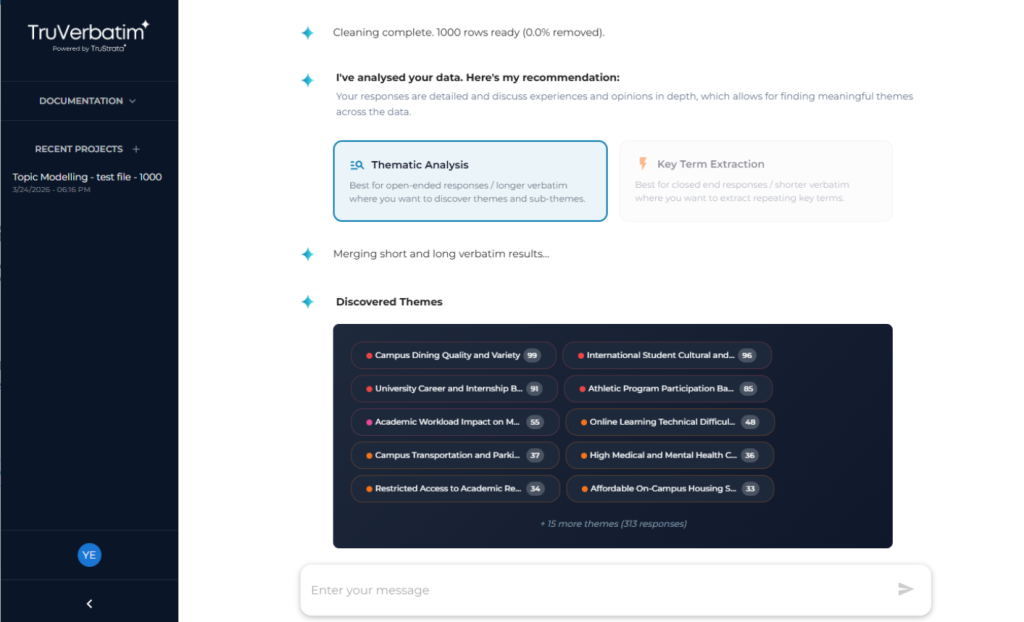
Automated theme discovery

Identify meaningful themes and sub-themes with no predefined categories needed. TruVerbatim finds structure in your data that manual coding would take days to surface.

Codeframe-based classification

Upload your existing codeframe and apply your own qualitative data analysis methods – with multi-label support so nuanced responses are never forced into a single category.

Conversational exploration

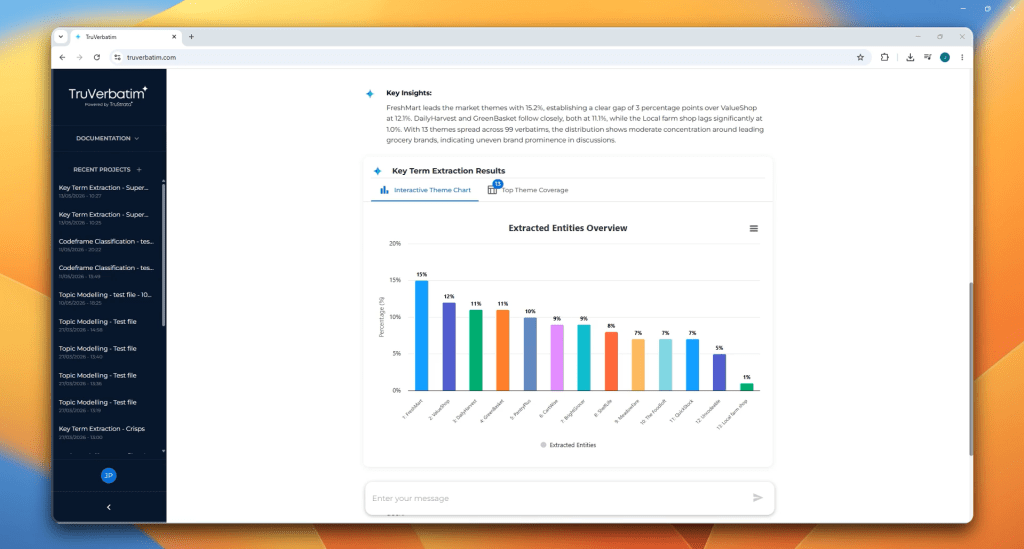
Ask questions in plain language to explore results by segment, demographic, or theme. Get instant crosstabs, sentiment breakdowns, and verbatim examples with interactive charts.

Research-grade outputs

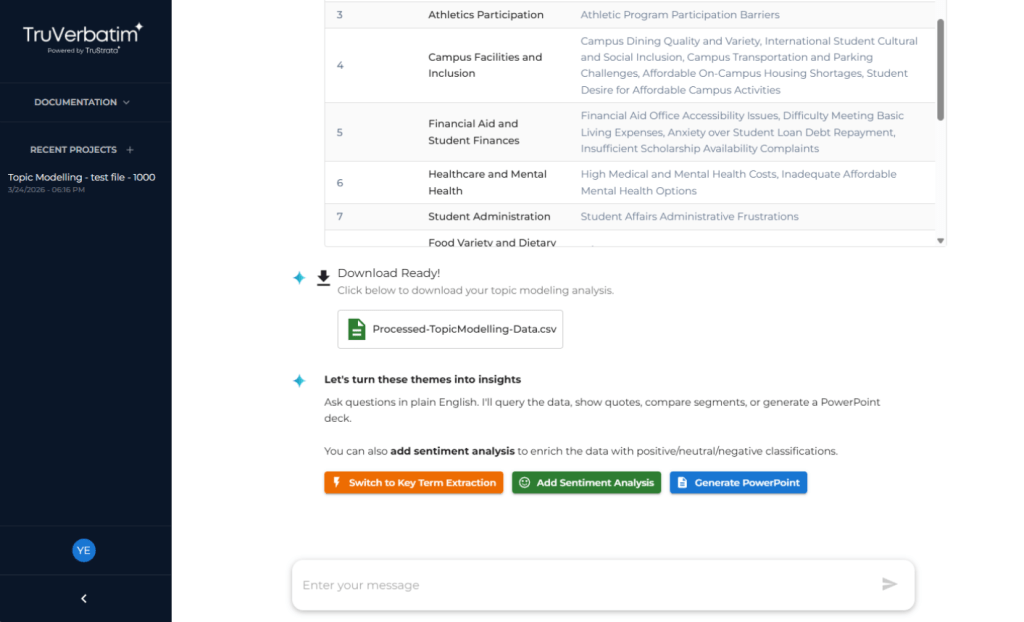
One-click PowerPoint export with embedded visualisations, theme summaries, and verbatim examples. Download coded CSVs for full flexibility. From raw data to client-ready report in a single workflow.

How TruVerbatim Works

1. Data Ingestion

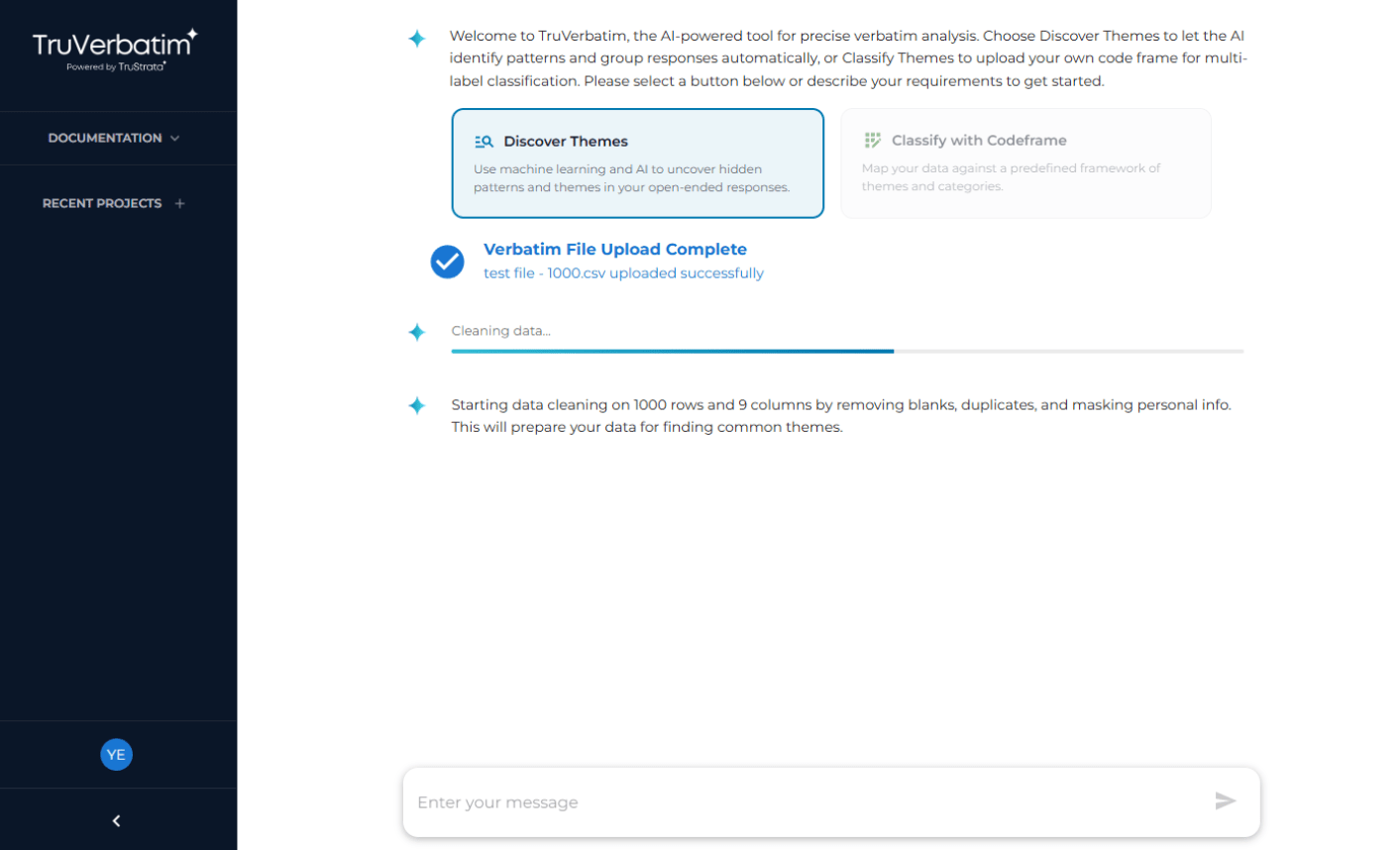
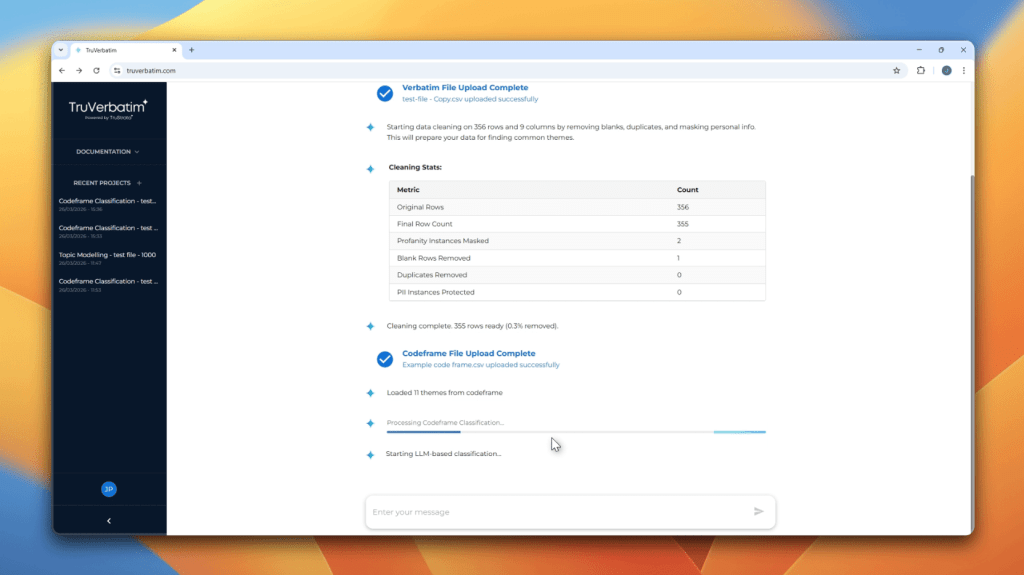
TruVerbatim begins by ingesting raw qualitative data from common research formats. The platform automatically cleans text, removes personally identifiable information, and prepares data for analysis.

2. Interaction

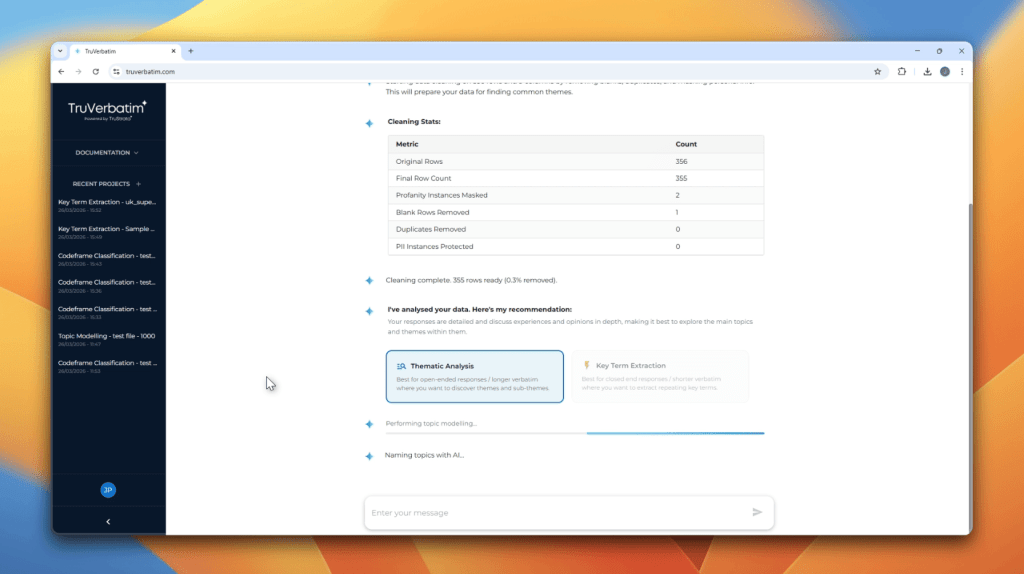
Researchers can choose between exploratory qualitative data analysis – where TruVeratim discovers and names themes automatically – or structured classification using a predefined codeframe. In both modes, users remain in control: themes can be merged, renamed, or reset at any point, ensuring the analysis reflects research context rather than generic automation. The qualitative data analysis techniques applied are transparent and adjustable throughout the process.

3. Inspection

Once analysis is complete, an interactive Q&A mode lets teams explore results conversationally, pulling sentiment breakdowns, crosstabs, and verbatim examples in plain English.  This makes TruVerbatim suitable for both exploratory work and formal data analysis in qualitative research for client reporting.
Capabilities

Built by researchers, for researchers

TruVerbatim supports a wide range of qualitative data analysis methods, including:

Thematic analysis and clustering via TruVerbatim
Domain or brand extraction from short responses
Sentiment analysis layered on themes
Multi-label coding for complex, nuanced responses
Crosstabs and segmentation of qualitative data
Exportable charts, coded datasets, and auto-generated PowerPoint reports

These capabilities allow teams to scale qualitative analysis without losing depth or nuance. The platform functions as computer software for qualitative data analysis that keeps the researcher in control at every stage.

Automate Data CleaningTransformationPrivacy

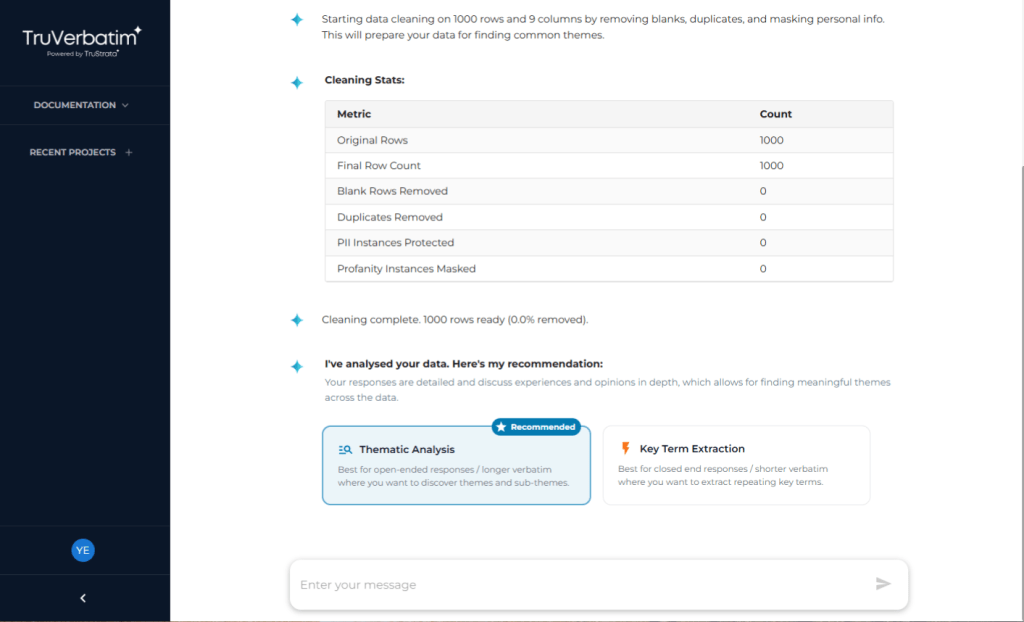
Handling qualitative data responsibly is non-negotiable. TruVerbatim includes automated data cleaning and privacy protection as part of its core workflow – not an optional add-on.

Personally identifiable information – names, email addresses, phone numbers, and locations – is automatically detected and removed before analysis begins. This ensures compliance with privacy standards while protecting respondent confidentiality. No manual scrubbing, no risk of something slipping through. By automating preparation and safeguarding steps, TruVerbatim reduces risk and manual effort, with its data analysis methods in qualitative research, allowing researchers to focus on interpretation rather than preprocessing.

Backed with expert consultancy

Dashboard Example Gallery

Docs

Alongside our consultancy, we have an excellent selection of resources for our customers.

Codeframe Classification

Getting Started How to classify verbatim responses against your own predefined codeframe using TruVerbatim. Codeframe Classification takes…

Read More
Theme Extraction

How to discover themes in your verbatim data using TruVerbatim’s AI-powered topic modelling pipeline. Topic Modelling reads…

Read More
Traditional qualitative analysis can take days or weeks of manual coding.

TruVerbatim accelerates this process by automating classification, exploration, and reporting within a single platform.

Researchers can process thousands of responses in minutes, iterate quickly, and generate consistent outputs across teams. This makes TruVerbatim suitable for both standalone qualitative studies and large-scale mixed-methods research programmes – and frees up the time researchers actually want to spend on interpretation and insight.

Pricing

Pricing is based on usage and support needs. Most teams start with a single project to see the workflow in action – book a demo and we will set one up around your data.

Frequently Asked Questions

Scroll to Top